Source: Iran International
Waqas Abdullah
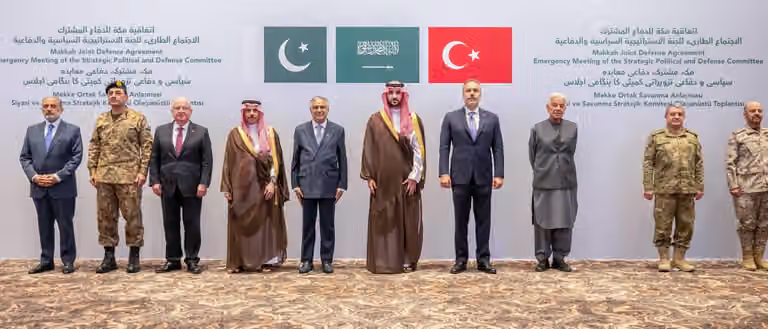
Earlier this month, Türkiye and Pakistan pledged to deploy troops to Saudi Arabia under the Mecca Joint Defence Alliance following repeated attacks by Ansar Allah. The three states agreed to activate deterrence measures and rapidly deploy forces, emphasizing that an attack on one would constitute an attack on all. This marks a shift from formal security commitments toward operational collective defense, demonstrating the practical implementation of Saudi Arabia’s multilayered security partnerships. These efforts show how Saudi Arabia is undergoing a significant transformation in the way it approaches regional security.
For decades, Riyadh relied heavily on bilateral partnerships, particularly with the United States, while maintaining defense relationships with several Arab and Muslim-majority states. However, the growing instability across the Persian Gulf, Red Sea, Bab el-Mandeb, and wider Middle East is pushing Saudi Arabia to develop a broader, more diversified security architecture. In July 2026, Saudi Arabia announced a maritime defence initiative involving a group of regional and international states aimed at protecting freedom of navigation, international trade routes, and energy supplies across key waterways. Reporting identified Türkiye, Kuwait, Bahrain, Qatar, Jordan, Egypt, Pakistan, Djibouti, Somalia, Bangladesh, Yemen, Sudan and the Comoros alongside Saudi Arabia. This development represented more than a conventional maritime-security arrangement. It was Riyadh’s attempt to connect the security of the Persian Gulf, Red Sea, and Gulf of Aden within a broader regional framework. The strategic importance of these waterways has increased as attacks on shipping and energy infrastructure have disrupted established patterns of trade. Saudi Arabia therefore appears increasingly interested in building security partnerships that complement, rather than simply depend upon, external military protection.
The Evolving Maritime Security Architecture
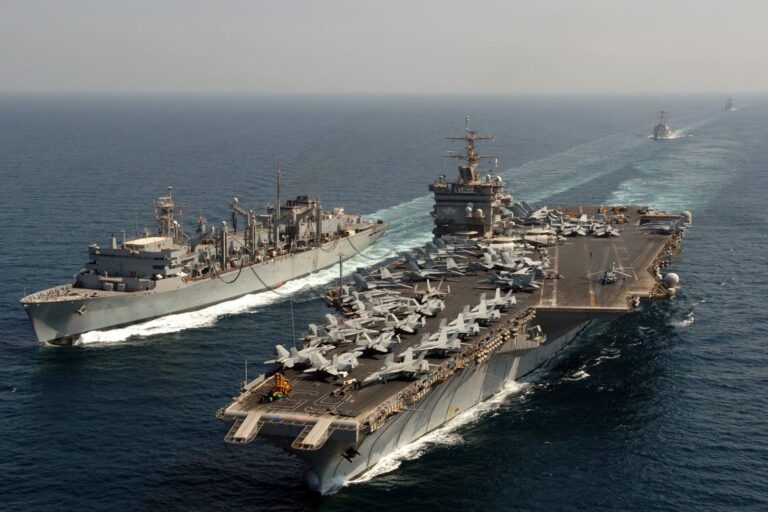
Saudi Arabia’s emerging security network primarily seeks to protect strategic maritime corridors, including the Strait of Hormuz, Bab el-Mandeb and the Red Sea. Amid tensions with Iran and Houthi attacks, Riyadh increasingly views maritime security, energy infrastructure, ports, and freedom of navigation as essential components of national security.
From Bilateral Alliances to Multilateral Security
Saudi Arabia’s evolving strategy reflects a shift from traditional bilateral security ties toward broader multilateral cooperation. While maintaining its longstanding defense relationship with Washington, Riyadh has increasingly diversified its partnerships.
The Saudi-Pakistani Strategic Mutual Defense Agreement strengthened joint deterrence, while the Makkah Defence Alliance further expanded collective security cooperation. These developments suggest that Riyadh is creating overlapping security partnerships to reduce reliance on a single external guarantor.
Türkiye and Pakistan: Two Strategic Pillars
Türkiye and Pakistan hold central positions in Saudi Arabia’s emerging security architecture. Türkiye contributes advanced defense capabilities and strategic access across Europe, the Middle East and the Black Sea, while Pakistan offers military experience and a better understanding of Riyadh’s concerns. The trilateral defense agreement therefore is likely to improve consultation and coordination, which could result in an increase in interoperability.
Red Sea, Gulf of Aden, and the African Dimension
Saudi Arabia’s security strategy is now increasingly accounting for the African side of the Red Sea. Djibouti, Somalia, and Sudan are strategically positioned along or near vital maritime routes, while Yemen remains central to the security of the Bab el-Mandeb Strait. The geography is crucial. The Bab el-Mandeb connects the Red Sea with the Gulf of Aden and is one of the world’s important maritime chokepoints. Instability in Yemen can therefore directly affect shipping between the Indian Ocean and the Suez Canal. Saudi Arabia’s interest in cooperation with states on both sides of this maritime corridor reflects the geographical reality that Gulf security cannot be separated from Red Sea security. This creates a wider strategic space in which Saudi Arabia is attempting to link Gulf security, Red Sea security and Indian Ocean connectivity.
Energy Security and Economic Stability
Energy security remains a key factor in Riyadh’s strategic calculations. As a major oil producer, Saudi Arabia is vulnerable to disruptions in the Strait of Hormuz and Red Sea, which can affect exports and global energy markets. These risks also threaten the country’s Vision 2030, which depends on investment, tourism, infrastructure, and economic diversification.
Consequently, Riyadh’s maritime security efforts aim not only to protect energy and trade routes but also to safeguard the broader economic foundations of Saudi Arabia’s transformation beyond hydrocarbons.
Strategic Autonomy and the U.S. Security Role
The expansion of partnerships with Türkiye, Pakistan, and other states does not mean that the U.S. security role has disappeared. American military capabilities, intelligence cooperation, air defense systems, and regional deployments remain important elements of the overarching security architecture. Riyadh appears to be developing a more diversified security portfolio. Rather than relying on one partner, Saudi Arabia is strengthening relationships with multiple countries possessing different military capabilities, geographical positions, and diplomatic networks.
This approach is aimed at providing Riyadh more security cushion during crises. However, it also creates a coordination challenge. Different states have different threat perceptions, foreign policy priorities, and limits on military involvement. The existence of a common security framework does not automatically mean that every participant will respond identically and automatically to every future crisis.
The Risk of Regional Militarization
Saudi Arabia’s expanding security partnerships may increase regional militarization by linking multiple states through collective defense arrangements. However, regional actors are also combining security cooperation with diplomacy. Türkiye, Egypt, Pakistan and Saudi Arabia have simultaneously condemned attacks on Saudi territory while emphasizing dialogue and diplomatic engagement as mechanisms for managing regional tensions.
The challenge for Riyadh will therefore lie in maintaining deterrence without allowing security arrangements to become mechanisms for uncontrolled escalation. Maritime security cooperation can protect commercial routes, but its effectiveness ultimately depends on political coordination and the ability of participating states to manage crises collectively.
Conclusion
Saudi Arabia’s emerging security strategy represents an effort to adapt to the changing strategic milieu in the Middle East. The expansion of cooperation across the Persian Gulf, Red Sea, Gulf of Aden, and South Asia indicates that Riyadh is attempting to construct a broader network capable of responding to increasingly interconnected security threats, as evidenced by the signing of key agreements.
For Riyadh, the central challenge is balancing deterrence, maritime security, economic protection and diplomatic flexibility. Saudi Arabia’s security power play is therefore not simply about expanding military partnerships. It is also about constructing a diversified regional security architecture in which the protection of energy, trade, and strategic waterways becomes a shared responsibility among multiple states. The future effectiveness of this approach will depend on whether these diverse partnerships can translate political coordination into sustained security cooperation without intensifying the conflicts they are aimed at containing.
Waqas Abdullah is the Director of Foreign Affairs at DAG Media Network and a geopolitical analyst.
The views expressed in this article are the author’s own, and they do not necessarily reflect those of Pakistan Politico.
About the Author