Source: China Daily
Shahnawaz Khan
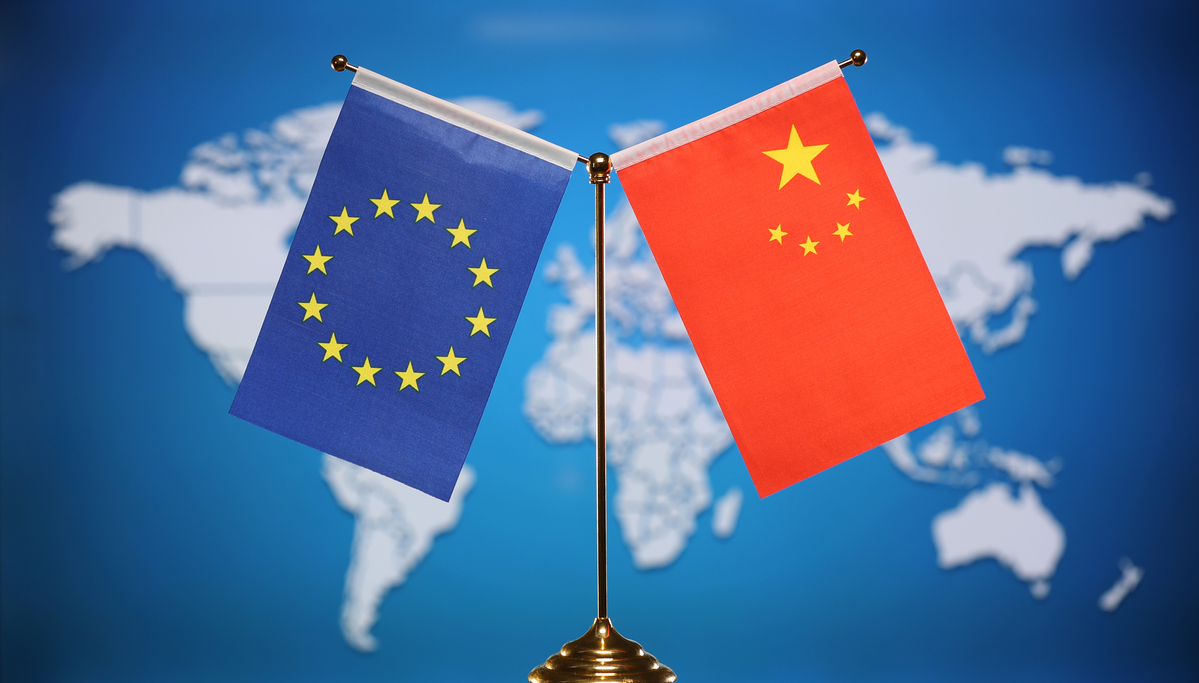
Over the past few months, China-Europe relations have witnessed a noticeable diplomatic thaw. In the past few months, China has hosted leaders of Spain, France, Britain, Finland, Ireland, and Germany, along with a delegation of European Union (EU) lawmakers. Many of the leaders were accompanied by large business delegations exploring reciprocal trade and investment opportunities in sectors ranging from pharmaceuticals to automobiles.
These are perceptible developments, as the relations between many of these states and Beijing were practically in a deep freeze, typified by widening mistrust on trade policies, human rights, the Ukraine war, and issues like critical minerals. The Prime Minister of Ireland visited China after a fourteen-year hiatus, while his British counterpart visited after eight. In a similar vein, the EU’s delegation came to Beijing following eight years of a rocky relationship.
While some observers describe it as a ‘strategic pivot’, the relationship appears more like a calculated recalibration with selective engagement aimed at expanding economic and diplomatic space in an increasingly unpredictable international environment. The economic, security, and political challenges that are a hallmark of this relationship will likely determine the limits of this reset.
Europe’s Strategic Hedging
One of the main drivers of this flexibility is the United States of America’s increasing discomfiture with its allies and partners, prompting Europe to broaden its diplomatic outreach to hedge against American pressures. Under Donald Trump’s second presidency, the relationship has come under unprecedented strain. Trump’s aggressive rhetoric on acquiring Greenland, coupled with increased tariffs on European exports and dismissiveness toward the NATO alliance, has made the Trans-Atlantic alliance more fractured than ever.
This diplomatic diversification is also part of a broader effort to preserve “European strategic autonomy.” The EU’s conclusion of a trade deal with India speaks to this endeavor. Under the proposed Free Trade Agreement, the EU and India have agreed to lower tariffs on more than 95% of goods and services. European countries are also increasing their economic footprint in South American and East Asian economies.
European countries appear to be taking their cue from Canada, whose leader was also among the diplomatic visitors to Beijing in January 2026. Following the visit, Prime Minister Mark Carney addressed the World Economic Forum in Davos and, in a much-vaunted speech, spoke about the ‘rupture’ in the world order. His advice to the middle powers was to be resilient and diversify their alliances with a view to meeting their peculiar challenges.
A Complex Economic Relationship
While the diplomatic warmth is significant, China and Europe are in a complex economic relationship. China is the EU’s second-largest economic partner in goods and third-largest overall after the U.S. and the UK. In 2024, its trade in goods with the EU reached 732 billion Euros. It became Germany’s largest trading partner, surpassing the U.S. in early 2026. China also remains a major export destination for Europe’s automotive sector, while being a crucial import source for green energy and manufactured products.
Brussels and London’s repeated allegations of unfair trade practices by China as well as concerns regarding the burgeoning trade deficit pose a test for the negotiators visiting Beijing. The EU’s trade deficit in goods with China for 2025 stood at a staggering 360 billion Euros.
European countries are also facing heightened industrial competition in many sectors from what they allege are subsidized Chinese companies. Germany’s auto sector is hard hit by the low cost and increasingly efficient Chinese-made electric vehicles (EVs). Chinese companies like BYD are rapidly overtaking the global EV markets at the cost of European and American car manufacturers. With the inclusion of the UK, Norway, and Switzerland, Europe accounts for 42% of Chinese sales of EVs, which have seen an exponential growth of 50% in March in the wake of the Iran war.
In 2023, the EU vowed to take its relationship forward on a ‘de-risk’ basis, seeking to move away from Chinese exports and vulnerable supply chains to limit its exposure to more deficits. It has also accelerated tariffs on Chinese EVs since 2024, along with the U.S., and has launched probes into Chinese products.
French President Emmanuel Macron addressed the issue of trade deficit quite directly after he visited Beijing. Writing for the Financial Times, he warned:
“Either we rebalance economic relations co-operatively—engaging China, the US and the EU in a genuine partnership—or Europe would have no choice but to adopt more protectionist measures.”
He stressed the need for a level playing field in investment and asked European countries to reciprocate the Chinese export bubble with investments in the service sector, where Europe leads. He is also championing the ‘Buy European Policy,’ which emphasizes reliance on European-made goods.
The renewed trade pressures have bound European governments to renegotiate market access and trade reciprocity, moving away from the strategy of outright decoupling and de-risking. The EU has already issued a ‘guidance document’ to ease the pressure on Chinese EV access to European markets through a new pricing mechanism.
Beijing has also indicated a willingness to engage. In trade deals with the UK alone, Chinese automaker Chery had announced opening its European headquarters in Liverpool. Similarly, AstraZeneca, a UK pharmaceutical company, has committed to investing $15 billion in China by 2030. Berlin has also secured a lucrative deal with Beijing on the sale of aircraft from the Airbus Group.
While the engagement remains limited, it defines how Europe and China are in an era of competitive coexistence marked by engagements as well as increasing concerns. The concerns on the European side, from overcapacity to export-driven growth, will remain a major challenge driving this recalibration forward.
Political Impediments
Beyond economics, European countries and Beijing have remained in a tussle over the latter’s alleged human rights record and support for Russia in the war against Ukraine. Beijing and the European countries have imposed sanctions on each other’s officials in the past on issues such as the sensitive Xinjiang region.
The detention of political activist Jimmy Lai was one of many contentious issues between Beijing and London. Beijing banned several British parliamentarians from visiting China as well.
These political issues limit the leverage that these countries can exert on Beijing by increasing the domestic political costs, often leading to backlash at home. British Prime Minister Sir Kier Starmer, speaking to reporters before boarding the flight to Beijing, stated the issue strategically: “We would raise the issue that needs to be raised, but part of the reason for engaging with China is so that issues where we disagree can be discussed.” This pragmatic approach underlines how Europe is giving the political issues a backseat while emboldening its stance on the economic front.
The alignment of interests between Beijing and Europe on pragmatism rather than symbolism gives credence to Beijing’s narrative of “Unity in Differences.” Europe is seeking to deepen and strengthen its ties with Beijing without the latter conceding on the crucial issues such as allegations of human rights, espionage, and electoral interference.
London has already authorized the development of the Chinese Mega Embassy in London, which was previously halted due to spying concerns. Beijing has also lifted the ban on British parliamentarians, smoothing relations.
Chinese President Xi Jinping took these steps to present China as a country committed to a multilateral world order and a predictable partner. While Europe has given diplomatic space on political issues, it still remains constrained by domestic political factors, especially the raging war in Ukraine, an issue that the French President raised with his Chinese counterpart, and its own fragmentation on China policy.
Paris and Berlin differ on pathways to engagement with Beijing. Paris has consistently advocated for a more protectionist stance and was the strongest supporter of tariffs on Chinese products. Berlin, whose automobile industry is entrenched in the Chinese market, takes a more cautious approach, fearing retaliatory measures. Madrid has also pitched itself as a reliable partner of Beijing, further complicating the equation for the EU. Spanish Prime Minister Pedro Sanchez made his fourth visit to Beijing in three years. It was marked by signing major Chinese investment deals for Spain and calls for greater trade integration with Beijing. These fault lines also make a united posture toward Beijing a difficult act for the EU.
The Ally Factor
While their relationship is at a historic low point, the United States still remains the primary economic and military partner of these countries, and its response, both economic and military, will surely have an impact on how things pan out between European powers and China.
“It’s very dangerous for them to do that,” commented the U.S. President after Starmer’s visit, as he threatened the imposition of more tariffs.
The Iran war has further exacerbated the complexity. European countries’ repeated reluctance to support the U.S. in the Middle East conflict has led to a harsh war of words between the Trump administration and the EU countries. The future of NATO itself hangs in the balance after Trump’s claim that the U.S. is seriously considering a withdrawal, and a raging war in Ukraine has given Europe a stark reality check. Europe has taken the signs and is set to enhance its military budget to account for the emerging security milieu.
This warmth with Beijing further strains NATO and Trans-Atlantic relations. The more the U.S. pressures its partner through economic and military means, the more the incentive for European countries increases to turn to Beijing as the second option for economic opportunities. However, when it comes to security, they remain entrenched with Washington in the latter’s Indo-Pacific Strategy and beyond. Engagements such as European lawmakers’ recent visit to Taiwan demonstrate the limits of European rapprochement with Beijing in the security domain.
All of this suggests that the endurance of this recalibration will depend on two factors: how Beijing responds to the issue of trade imbalances and how Washington responds to widening mistrust with its European allies. Rather than signaling a strategic pivot, this diplomatic warmth shows how the EU and London are increasing their room for maneuver in an increasingly uncertain world. Beijing stands to benefit from this equation by positioning itself as a less volatile partner for European countries.
Shahnawaz Khan is an international relations researcher associated with the Whitestone Legislative Advocacy.
The views expressed in this article are the author’s own, and they do not necessarily represent those of Pakistan Politico.
About the Author