Source: Dunya News
Abdul Wassay
For decades, Pakistan has been on the receiving end of cross-border terrorism emanating from Afghanistan and has, more often than not, relied on restraint and diplomacy to convince the Afghan Taliban to take action against the Tehrik-i-Taliban Pakistan (TTP) and other inimical elements. Operation Ghazab Lil Haq, the ongoing military action against the Afghan Taliban and the TTP, however, underscores a decisive doctrinal shift in Pakistan toward pragmatism. The Afghan Taliban have failed to act on their obligations, under the Doha Accords as well as other diplomatic understandings with Pakistan, to act against terrorists on Afghan soil.
Those commitments have remained unfulfilled. With militant safe havens still intact, Pakistan has been compelled to change tack. This Operation, therefore, is a decisive enforcement of Pakistan’s red lines against terrorism. Pakistan is now moving beyond the policy of restraint and shifting toward a zero-tolerance approach to dealing with terrorism, imposing costs on all involved malign actors.
Pakistan initiated its kinetic actions following relentless, unprovoked cross-border attacks and firing from Afghanistan in 2026. Pakistan squarely held the Afghan Taliban responsible for sheltering and abetting the Tehrik-e-Taliban Pakistan (TTP) and lamented their inability to control groups like the Islamic State Khorasan Province (ISKP). This escalation followed months of deteriorating border security and terror-related violence. Ever since the Operation has started, militant attacks in Khyber Pakhtunkhwa (KP), the province most affected by the TTP-Afghan Taliban nexus, have reduced considerably. According to the Center for Security, Strategy and Policy Research’s (CSSPR) Pakistan Risk, Incident, and Security Monitor (PRISM), 129 attacks took place in the province in February. However, from March 1 until April 15, 2026, KP has witnessed just 30 attacks.
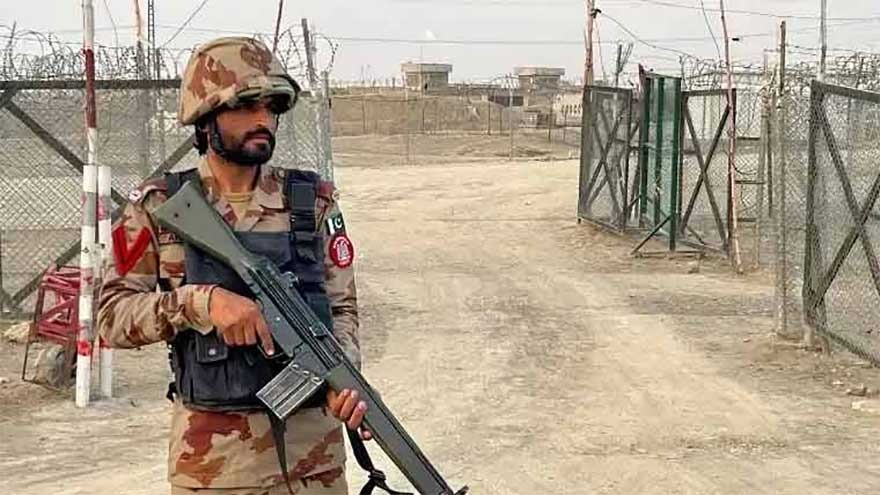
The Operation is a full-spectrum cross-border campaign featuring precision airstrikes, the targeting of militant infrastructure, and ground engagements along the border areas. According to authorities, from the start of the operation until April 5, 2026, the Afghan Taliban have faced heavy losses. These include 796 terrorists killed and over 1,043 injured. A total of 286 posts were destroyed and 44 posts were captured. The Pakistan Air Force (PAF) also effectively neutralized approximately 100 militant locations across Afghanistan. Pakistan also destroyed 249 tanks, armoured vehicles, artillery guns, and drones belonging to the Afghan Taliban and allied terrorist factions.
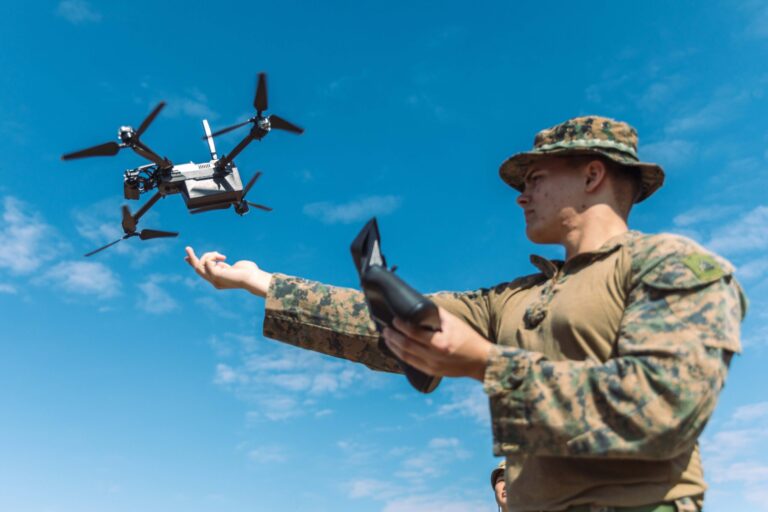
Operation Ghazab Lil Haq is seen as a forceful, necessary counterterrorism response to persistent terrorist threats, demonstrating a pragmatic approach taken by Pakistan to address the issue of terror originating from Afghanistan. It is also an assertion of Pakistan’s sovereignty and border security. Likewise, this Operation demonstrates Pakistan’s readiness to employ force beyond borders to enforce red lines and showcase Pakistan’s resolve to both state and non-state anti-Pakistan actors working from inside Afghanistan. These terrorists, from their safe havens in Afghanistan, have also started employing drones against civilians, to which the PAF responded swiftly and decisively.
Pragmatism in statecraft refers to choosing a path that delivers actual results on the ground, not just policies or statements that look good on paper or are acceptable in diplomatic circles. Operation Ghazab Lil Haq manifests this pragmatism in several ways.
First,the ineffectiveness of restraint vis-à-vis Afghanistan has come to the fore. Despite multiple diplomatic engagements and border management efforts by Pakistan, cross-border militancy persisted due to the Afghan Taliban’s inadequate action against terrorist outfits and their supporters operating from Afghan territory. Using pragmatic logic, it should be understood that when peaceful measures fail to change the behaviour of the other side, hard measures become unavoidable. In this sense, the Operation was not a knee-jerk escalatory step, but a careful, calculated replacement for restraint.
Second, the Operation is typified by the selective but uncomprising use of force. It is termed “Open War” against terror. Pakistan has targeted specific terror outfits, launch pads, and production facilities. This shows that Pakistan has identified specific threats and is not striking indiscriminately. Pragmatism is visible because of the disciplined use of force and clear limits with defined objectives. Under the instructions of Air Chief Marshal Zaheer Ahmed Baber Sidhu, the air operations undertaken have tried to minimize collateral damage. The overall aim of this Operation is to address the immediate challenge without unnecessary escalation of the situation.
Third, in pragmatic statecraft, military action is not separate from political messaging. The aim of the Operation is not only to target threats on the ground but also to send a message to terrorists and their supporters. Pakistan, through its military action, conveyed to terror groups that their actions will have consequences. This Operation also shows Pakistan’s preparedness to protect its vital interests by all necessary means.
To conclude, Operation Ghazab Lil Haq reflects a major shift in the strategic thinking of Pakistan toward a more pragmatic form of statecraft. Instead of depending only on diplomacy, restraint, and persuasion, Pakistan is using calibrated force to protect its sovereignty. It is part of a broader effort to adopt a more realistic and responsibility-driven security policy with a view to countering wide-ranging threats.
Abdul Wassay is a Research Assistant at the Centre for Aerospace and Security Studies (CASS) Lahore.
The views expressed in this article are the author’s own, and they do not necessarily represent those of Pakistan Politico.
About the Author