Source: Dialogue Pakistan
Nidaa Shahid
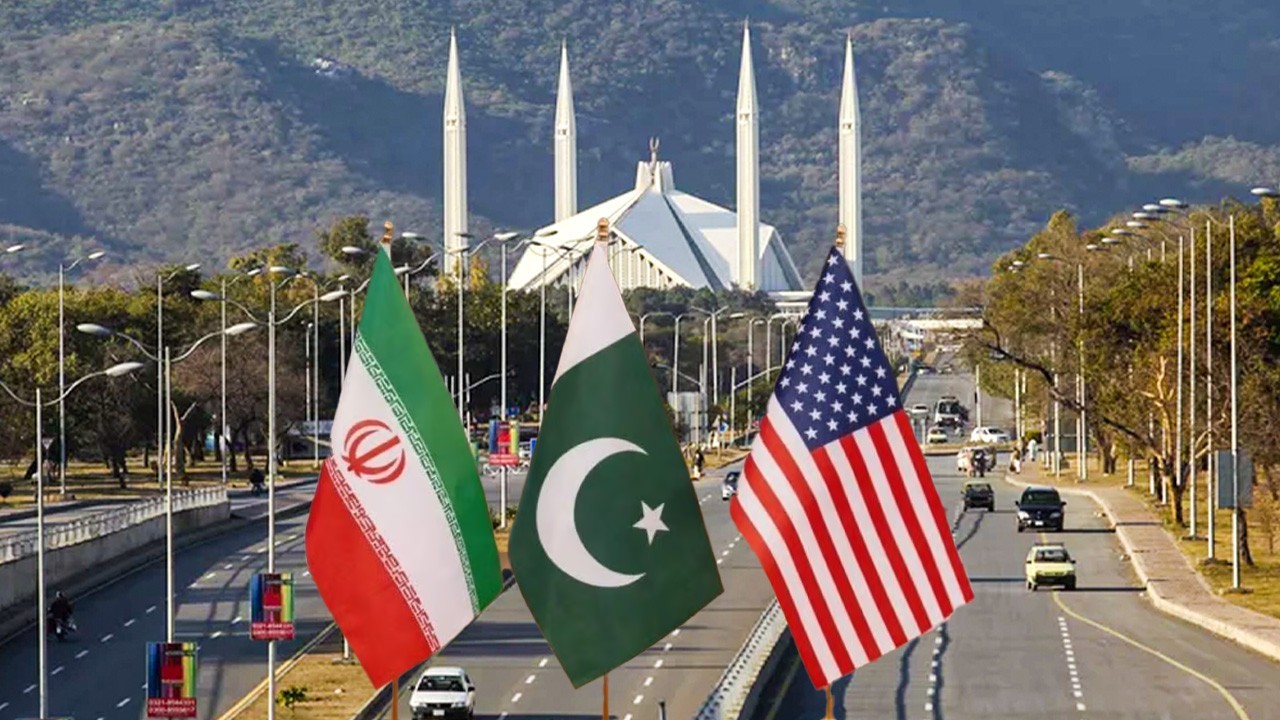
When the U.S.–Israeli war against Iran was threatening to morph into a global catastrophe, it was neither a major power nor any of the longtime mediators who stepped in to find a pathway toward de-escalation. Instead, it was Pakistan, a country often viewed as peripheral to global crisis management, that brokered a ceasefire understanding between these inveterate adversaries. While much still needs to be done, this development, in and of itself, is significant for many reasons. This is not only a diplomatic success story but also indicative of a deeper structural shift in how conflicts are being managed and resolved.
Bilateral conflict resolution, which requires adversaries to retain sufficient political bandwidth to engage directly, is becoming increasingly misaligned with today’s geopolitical realities. In highly securitized rivalries, such as the one between the U.S. and Iran, negotiations themselves can become a liability. The leaders are constrained by strategic calculations, domestic audiences, the optics of concession, and entrenched narratives. Third-party mediation, therefore, offers a viable alternative and sometimes the only path forward.
The ongoing crisis in the Middle East provides the most important context in this regard. The U.S.–Iran rivalry has featured an iterative conflict with deep roots stemming from recent geopolitical and historical grievances. The convergence of these pressures at a time when direct diplomacy was becoming politically untenable for both sides is what makes this moment particularly volatile. For Washington, any engagement with Tehran risked political backsliding and loss of face in light of their amped-up rhetoric of war. For Tehran, direct negotiations could have resulted in domestic backlash and reputational costs, which it could ill-afford. This is precisely how and where bilateralism for conflict resolution begins to break down.
Pakistan’s mediatory efforts are indicative of the new tenor of mediation, which is becoming increasingly popular in crisis management and mitigation. Islamabad does not possess the capability to coerce either party, nor did it attempt to impose any settlement. What it did use was its relational leverage, in the absence of any material advantage, to bring both sides to the negotiating table. Pakistan’s working relationship and functional ties with both the U.S. and Iran, alongside the absence of any perception on either side of Pakistan posing an existential threat, proved to be a rare and consequential combination.
Pakistan, in this respect, became the facilitator, allowing both Tehran and Washington to explore pathways toward de-escalation without bearing the costs of a direct engagement. Within the mediation literature, this approach is termed facilitative, where the mediator provides the table without any intention of dictating the outcomes. The hosting of the upcoming negotiations in Islamabad is a manifestation of this approach. That being said, Pakistan has also engaged extensively with both parties, contributing to shaping the terms of negotiations.
This episode also has significance that extends beyond the current crisis. It is indicative of a rapidly growing trend in which third-party mediation is re-emerging as the central mechanism for conflict resolution at a time when bilateral approaches are proving to be increasingly ineffective. Other events from recent history also reinforced this pattern. The May 2025 crisis between Pakistan and India escalated rapidly and ultimately pushed the Indian side to go to the U.S. to help de-escalate the situation. Similarly, the 2023 rapprochement between Saudi Arabia and Iran was facilitated by China, highlighting the continued relevance of third-party mediation even for proximate regional states.
What seems to be changing, however, is who now plays the role of the mediator. Traditionally, this role fell to major powers capable of offering incentives, imposing costs, or guaranteeing favorable outcomes for both sides. A recurring issue with the approach was the inevitable tilt of the major power toward one or the other, undermining true neutrality. Additionally, the great power competition between the major powers always added suspicion to their role as more for their own power projection ambitions rather than any desire for conflict resolution.
Regional powers, on the other hand, are not burdened by such ambitions or ulterior motives. Pakistan’s role in this current crisis is an example of this shift. The country did not enter the fray with overwhelming power but with a sense of responsibility as a regional partner and a degree of perceived neutrality. This is a different role for a mediator, one which prioritizes stability over coercion.
Islamabad’s central role in the U.S.–Iran ceasefire is therefore not an anomaly. It is a clear reflection of a new emerging logic: third-party mediation, brokered through middle powers like Pakistan, is increasingly becoming the gold standard for conflict resolution and mitigation. How this trend develops over the longer term depends on the outcome of this ongoing round as well as the eventually emerging regional and global order.
Nidaa Shahid is a Senior Research Associate at the Centre for Aerospace and Security Studies (CASS), Lahore.
The views in this article are the author’s own, and they do not necessarily represent those of Pakistan Politico.
About the Author