Source: Dawn
Abdul Waris Hameed
“Water is not a weapon, thirst is not diplomacy, and famine is not statecraft,” remarked Bilawal Bhutto, Pakistan’s former Foreign Minister, during an international seminar titled “The Indus Waters Treaty: A Key Instrument for Peace and Regional Stability” at the Jinnah Convention Centre, Islamabad. Bhutto’s remarks come weeks after India’s Defense Minister, Rajnath Singh, vowed to stop Pakistan’s water, underscoring India’s relentless efforts to weaponize water. The most glaring example of such attempts was India’s decision to hold the Indus Waters Treaty (IWT), a landmark water-sharing agreement between India and Pakistan, in abeyance in April 2025 following the Pahalgam attack. This brazen unilateral action has been supplemented by inflammatory statements that boast of India’s hydrological coercion. Such rhetoric cannot be dismissed because it signals the beginning of a new phase of Indian aggression. It cannot be left unchecked not only because it is violative of international law and norms but also because it has catastrophic implications for Pakistan and the region.
What is the Indus Waters Treaty?
Brokered by the World Bank in 1960, the IWT divides the waters of the six rivers in the Indus River system between India and Pakistan. The three eastern rivers (Ravi, Sutlej, and Beas) are allotted to India, while the three western rivers (Indus, Jhelum, and Chenab) are allocated to Pakistan. India can still utilize the waters of the western rivers to generate electricity, but it cannot divert the flows or build large storage reservoirs on them. However, the IWT increasingly became broader than a water-sharing agreement, establishing a completely new ecosystem of cooperation and engagement between the two rival states.
The Pakistan-India Permanent Indus Commission (PIC) hosted regular commissioner-level talks and exchanged relevant data among the concerned agencies. The IWT did not just govern the flows; it also kept the window of cooperation open even in times of tension. For instance, in 2023, India, through the PIC, requested Pakistan to open the gates of the Sulemanki Headworks. This was accepted, saving many Indian villages from flooding while inundating areas in Pakistan.
The regular sharing of flow-related data was also a significant feature of the IWT, which helped both countries with small-scale flood management and disaster risk management. Losing all of this to India’s geopolitical ambitions would deal a significant blow to greater regional cooperation.
Criticisms and India’s Opposition
Voices from both sides have expressed concerns about the IWT, maintaining that the Treaty favors them less. Pakistani experts like Hassan Abbas note that the IWT never favored Pakistan, and Ahmad Ali Gul argues that the only reason the IWT has remained operational for more than six decades is that, for the longest time, it had favored India. Such concerns have been raised officially, too. For example, India served Pakistan with notices in 2024 and 2025, asking the latter to revisit the Treaty and threatening to halt the PIC’s meetings. Pakistan’s categorical response is that any proposed changes to the Treaty should be tabled in the PIC. In 2024 and 2025, India argued that the IWT, in its current form, did not address exaggerated groundwater withdrawals from the Indus Basin. According to India, these could contribute to increasing water stress, aggravating the effects of climate change, and disrupting the Basin’s flow. Therefore, it is reasonable to argue that India was laying the groundwork for the Treaty’s abeyance long before the Pahalgam attack happened.
The Effects of India’s Hydrological Coercion
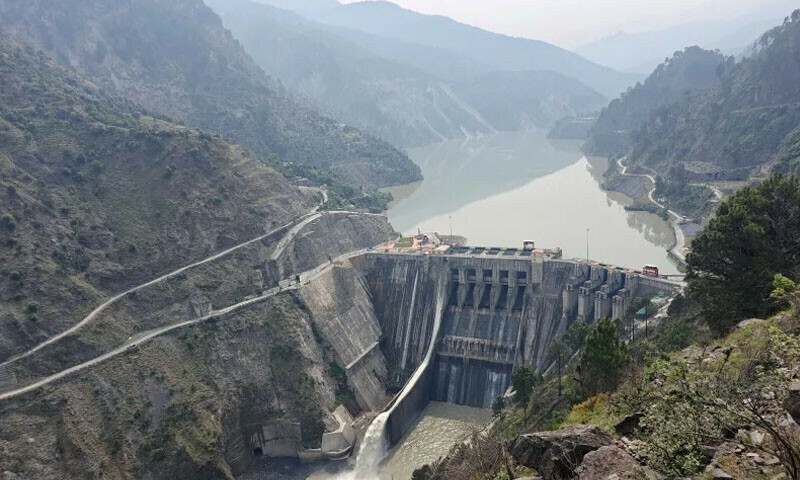
Following the abeyance of the IWT, India has tried to weaponize water, including by ‘halting the flows’ in the Chenab River via the Baglihar Dam and unilaterally approving the Dulhasti Stage II on the Chenab. However, Pakistan has challenged India’s hydrological coercion at global forums, which have supported Pakistan’s position. The Permanent Court of Arbitration maintained that a unilateral hold on the IWT has no legal basis. This came as a significant addendum to the World Bank President’s point of view.
An upper riparian’s defiance of a treaty brokered by an international organization is a huge blow to the rules-based order. It should concern all Indian neighbors, including Bangladesh and Nepal. The IWT’s unilateral abeyance not only impacts the diplomatic landscape in South Asia but also greatly threatens the ecology, economy, and human security across the region.
Rivers are not water pipes that can be shut down with a tap. If anything, they are important components of the larger ecosystem that runs across the Indo-Gangetic plain in interconnected ways. Rivers are the lifelines of the economy and significant shapers of human development and progress.
India’s hydrological aggression has serious implications for Pakistan at all levels, ranging from economy to human security. Pakistan relies on the flows from the Indus River system to support its economy and development. The agriculture sector, which accounts for about 23.5 percent of Pakistan’s GDP and employs 33.1 percent of the population, faces a serious challenge from fluctuating weather patterns, which, coupled with India’s hydrological aggression, will severely impact Pakistan’s food and economic security.
This also has implications for Pakistan’s energy security, in which hydropower accounts for more than 25 percent and is entirely dependent on flows in the western rivers. Attempts to change flows from the Indian side can also deepen the existing crisis of freshwater availability for domestic use.
All of this means that the international community must not let India’s ongoing weaponization of water go unchecked. While all countries should be concerned, Bangladesh and Nepal should see this as a worrisome act, as both not only have water-sharing mechanisms with India but also suffer from India’s imposing attitude in bilateral engagements.
For Pakistan, it is imperative to initiate a proactive diplomatic process with regional and global stakeholders. Given Pakistan’s present position in the global diplomatic landscape, it should leverage its relations with the U.S. to bring India to the negotiating table and use China’s upper-riparian position (relative to India) as well in this regard. Victor Gao, Vice President of the Center for China and Globalization, suggested expanding the IWT into a trilateral mechanism. Pakistan should also work with Bangladesh to establish an Indo-Gangetic forum to advocate for the rights of lower riparian states in the region. Last but not least, Pakistan should focus on developing resilient frameworks and infrastructure to mitigate the impacts of fluctuating water flows.
The Indus Waters Treaty has survived multiple conflicts and more than six decades of rivalry, successfully keeping water out of the battlefield and on the table. India’s unilateral abeyance breaks that firewall, and its consequences will not remain confined to India and Pakistan alone. What is at stake is not just Pakistan’s share of the Indus but the very idea that an upper riparian power should coercively create lower-riparian dependencies. If India is allowed to set this precedent unchallenged, it would not be the last upper riparian state tempted to turn a river into a lever.
Abdul Waris Hameed is a Research Associate at the Center for Security, Strategy and Policy Research (CSSPR), University of Lahore.
About the Author