Source: Atlantic Council
Waqas Abdullah
The ongoing Iran war is taking its toll on the Gulf states. After the U.S. and Israel attacked Iran on February 28, 2026, the Islamic Revolutionary Guard Corps (IRGC) retaliated with missile and drone strikes on U.S. military bases and allied infrastructure in Bahrain, Kuwait, Qatar, and the United Arab Emirates (UAE). This series of relentless strikes underscores the vulnerability of the Gulf countries. The traditionally conservative and economically interdependent Saudi Arabia, the UAE, Qatar, and Kuwait are compelled to juggle Western security aims and stability-enhancement efforts at the regional level. Their closeness to strategic chokepoints, not least the Strait of Hormuz, has made them susceptible to both military and economic coercion.
Direct Security Challenges
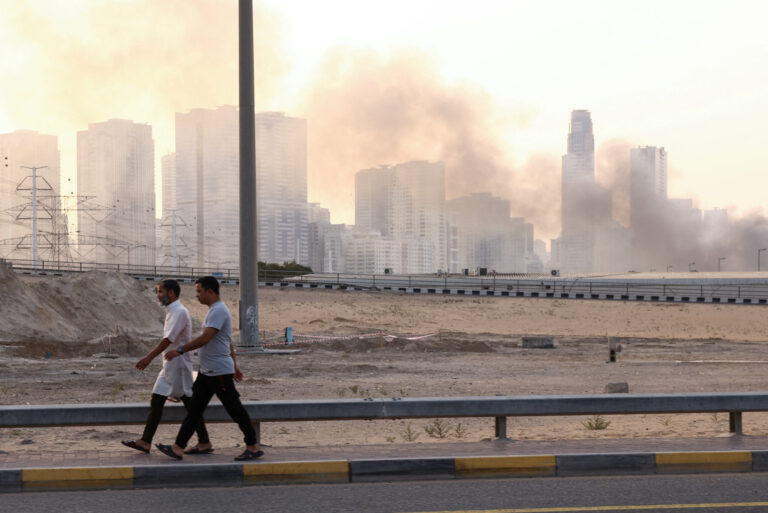
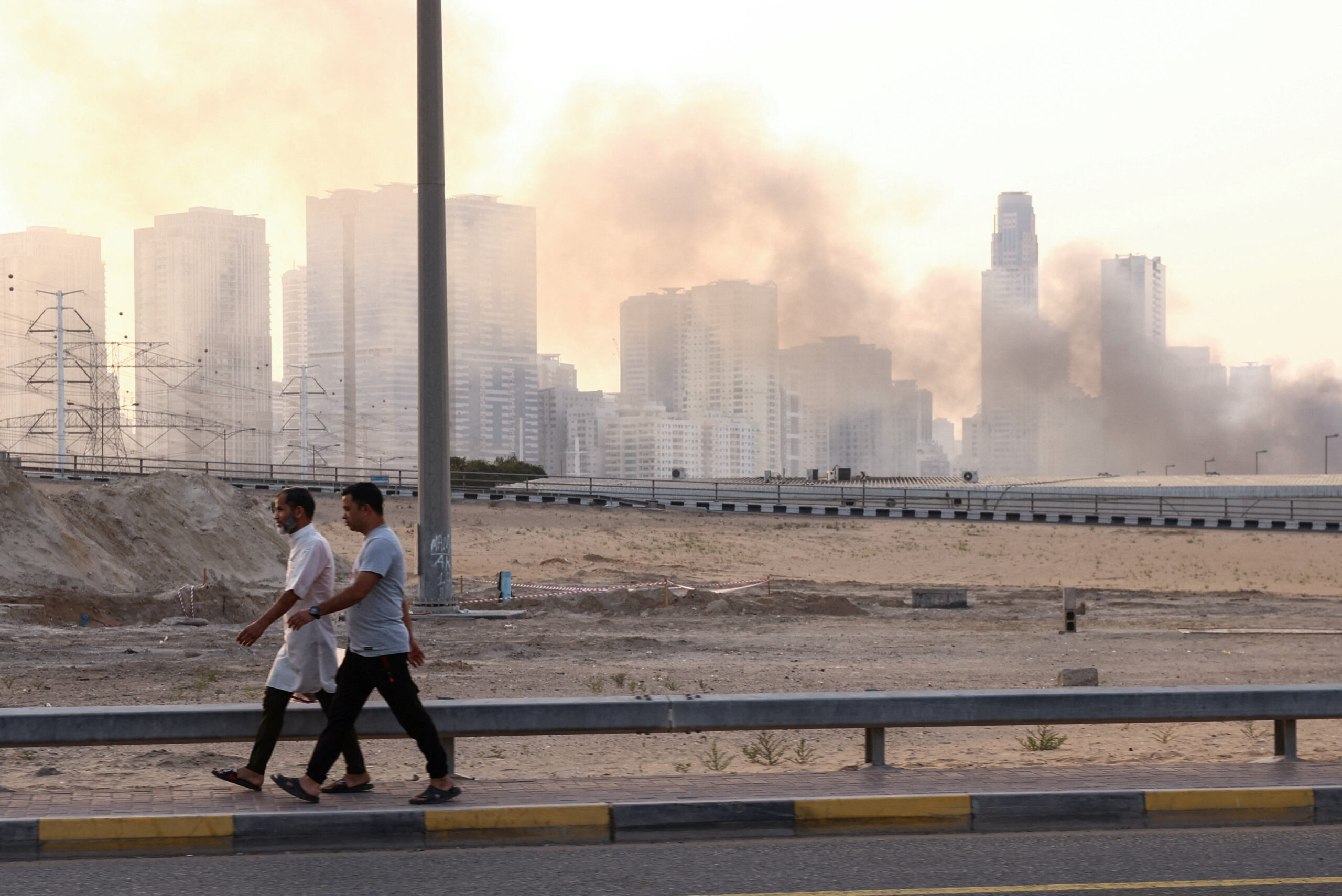
Such kinds of direct security threats have never been witnessed in decades in the Gulf nations. Alarms, explosions, and temporary evacuations of the civilian population are caused by the missile and drone attacks in Bahrain, Kuwait, and the UAE. These waves of Iranian attacks are threatening critical infrastructure such as ports, energy facilities, and airports, forcing governments to close airspace and institute emergency measures. Also, they have not only exposed weaknesses in traditional defense preparedness but also called into question U.S. military assistance and regional interdependence. Although these countries have well-developed air defense mechanisms, these unrelenting Iranian salvos highlight the challenges associated with protecting civilian and economic infrastructure.
Energy and Economic Implications.
The economic consequences of the attacks against critical infrastructure in the Gulf are also severe. The closure of the Strait of Hormuz, through which almost 20-30 percent of the world seaborne oil passes, has had a crippling effect, as evidenced by a sharp increase in oil prices. Moreover, financial markets have also become volatile due to low investor confidence. Although the Gulf states are still the major producers, creating impediments in shipping lanes would jeopardize national revenues, diversification policies, and the inflows of tourism. Ports across the region have experienced delayed operations because of the increased security measures. For their part, airlines and shipping companies are diverting cargo to reduce the risk. For countries such as Saudi Arabia, which has centered its Vision 2030 strategy on tourism, infrastructure expansion, and international trade, these attacks could have long-term strategic implications.
Political Disintegration and Foreign Policy.
The current crisis also highlights differences between the Gulf countries. Although they all have traditionally opposed Iran, they react differently to that country’s actions. Saudi Arabia and the UAE have mainly relied on economic stability and restrained diplomacy, notwithstanding their engagements in proxy wars. Kuwait and Qatar, juggling domestic political demands and regional relationships, have also taken defensive positions and promoted dialogue despite hosting U.S. bases. Bahrain, a small island, has chosen to remain close to the U.S. These somewhat divergent strategies show the internal schisms in the Gulf Cooperation Council (GCC), as well as the outside pressures exerted by influential allies like the United States and Israel. The war has now brought to the fore the fact that Gulf states do not exist as monoliths. If anything, their differing strategies seek to ensure economic survival, maintain domestic stability, and meet regional and external security commitments.
Social and Civil Implications.
In addition to having an effect on states’ security and stability, the Iran war is directly impacting the people. Military exercises, threat warnings, and airspace closures have disrupted everyday life. In the UAE and Qatar, locals, expatriates, and tourists have suffered tremendously as a result of frequent bombings. The decline in the number of visitors, cancellations, and uncertainty about the future could deal a severe blow to the tourism industry, making its revival extremely difficult.
Military Dependence; Regional Autonomy Strategic Dilemma.
Gulf states are in a strategic dilemma. On the one hand, their security is heavily dependent on the presence of the U.S. military and high-tech weapon systems. On the other hand, their dependence on outside forces makes them Iran’s primary targets. It is this dependence that has made it bear the brunt of Iran’s asymmetric war, which features drones, missiles, and proxies.
This is no less than a quagmire for the Gulf countries. If the Western security cover is removed, these countries would be weakened. If the security architecture remains the same, an enraged Iran would punish the Gulf countries, marring peace and stability in the Persian Gulf.
The Risk of Escalation
If the past two weeks of the war are anything to go by, there are greater risks of escalation. Actors such as the U.S., Israel, Iran, and local proxies, not least the Houthis, could contribute to increasing the scale and scope of the war, creating further instability in the Persian Gulf. The presence of strategic chokepoints and energy infrastructure means that any military response by the Gulf countries will lead to uncontrollable escalation, which would be catastrophic for the global economy. However, what is more concerning is that an overreliance on non-kinetic and diplomatic means might lead to more attacks from Iran, engendering more ruckus and mayhem. Navigating this dilemma is certainly a tall order.
All in all, the Iran war has put immense pressure on the Gulf countries. The brazenness of Iranian attacks might compel these countries to review their security policies and dependence on Western allies. However, the future of the Persian Gulf is not only dependent on how quickly the immediate threat is thwarted but also on how the political and economic ramifications are managed.
Waqas Abdullah is the Director of Foreign Affairs at DAG Media Network and a geopolitical analyst.
The views expressed in this article are the author’s own, and they do not necessarily reflect those of Pakistan Politico.
About the Author