Source: World Geostrategic Insights
Ehsan Ahmed Khan
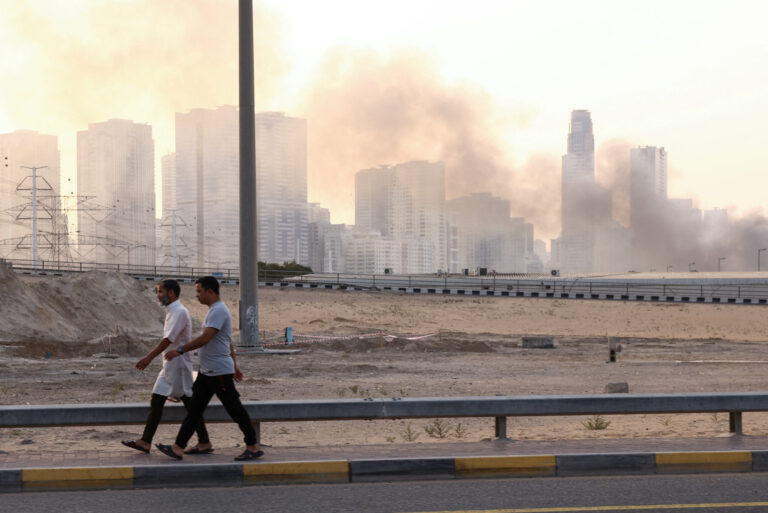
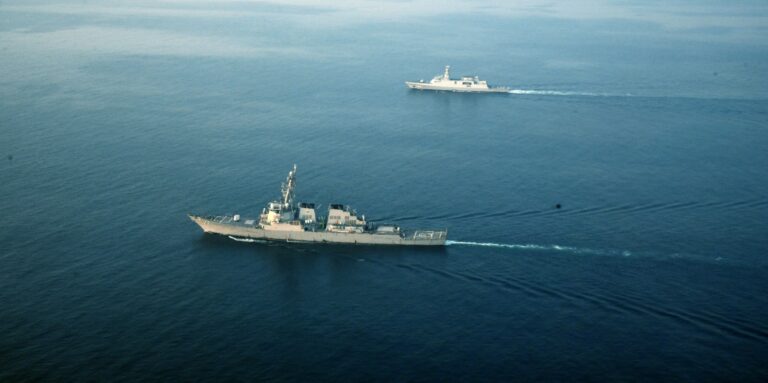
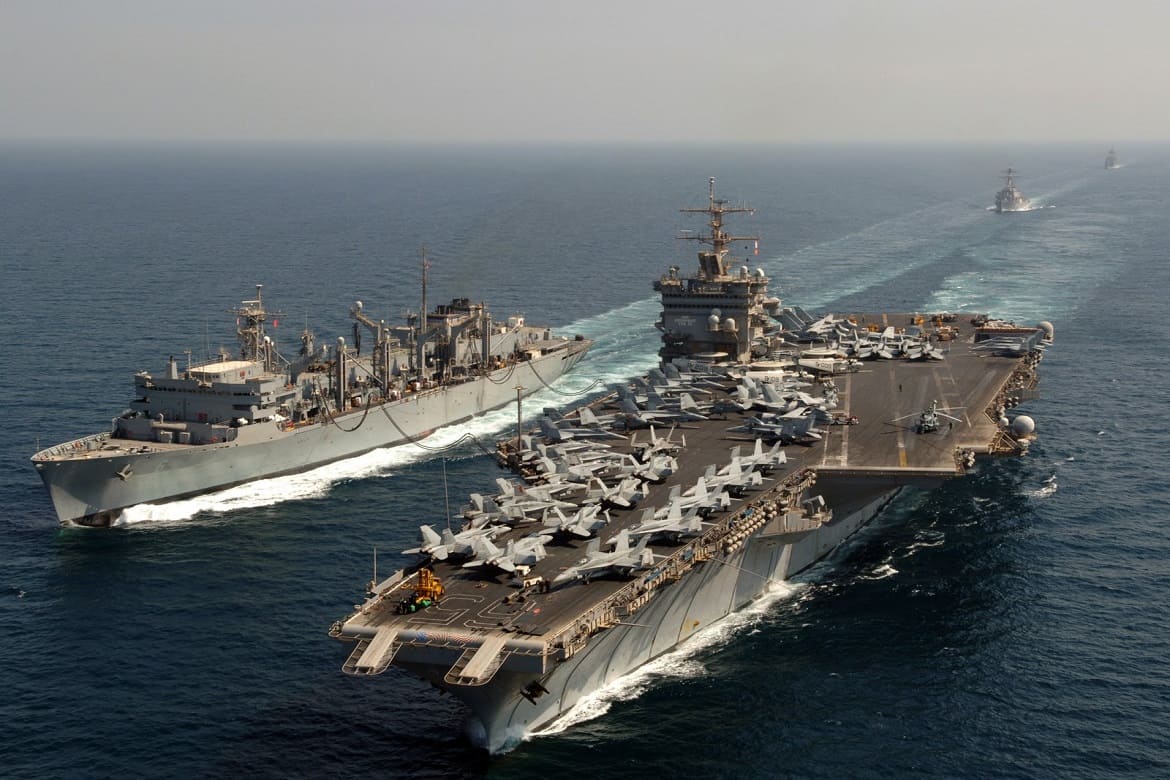
Bounded by three of the most critical chokepoints, the Indian Ocean, also referred to as “cradle of globalization,” has been the main passage linking the east to the west. Apart from being the busiest international trade route, the Indian Ocean has been the focal point of geostrategic competition. The littorals of the Western Indian Ocean have gained further prominence as regional conflicts, great-power competition, and systemic disorder intersect with increasing intensity. Stretching from the Red Sea and the Horn of Africa to the Arabian Sea, this maritime space is not only rife with localized crises but also cogested by a combination of regional and global conflicts.
For example, the conflict in Yemen has evolved from a civil war into a sustained maritime security challenge. The Red Sea, through which 10 to 12% of global trade and energy supplies transit, has become a theater of contestation. Houthi attacks on commercial shipping and naval targets underscore how non-state actors, empowered by regional rivalries, can disrupt critical sea lines of communication. Compounding this challenge is the strategic divergence between Saudi Arabia and the United Arab Emirates(UAE) in Yemen. The geopolitical competition between the hitherto closely knit Gulf partners is also permeating Africa and the Red Sea. Their differing priorities and local alliances have fostered proxy competition rather than cohesive security outcomes.
Further south, Israel’s recognition of Somaliland carries consequential strategic implications for maritime security. External military access, intelligence cooperation, and basing arrangements in and around the Horn have already intensified competition among regional and extra-regional actors. Israel’s move adds another layer to the securitization of regional politics. Israel’s Foreign Minister’s visit to Somaliland and Somaliland officials admission of likely Israeli military presence in the territory, which would have advantages for Israel against the Houthis, further complicate regional security dynamics. In recent years, Somaliland has fostered deeper relations with Ethiopia, the UAE and Taiwan, with a view to seeking international acceptance. Reports also emerged, in 2025, linking potential recognition of Somaliland by Israel to plans for forcibly moving Gazans to an African region. Ethiopia, attempting to recognize Somaliland in exchange for access to the Berbera Port, was forced by Turkiye and Somalia to backtrack from its intent. Though Addis Ababa prefers strategic silence with a view to avoiding inflaming regional hostilities, it is unwilling to foreclose its previous commitment to Somaliland.
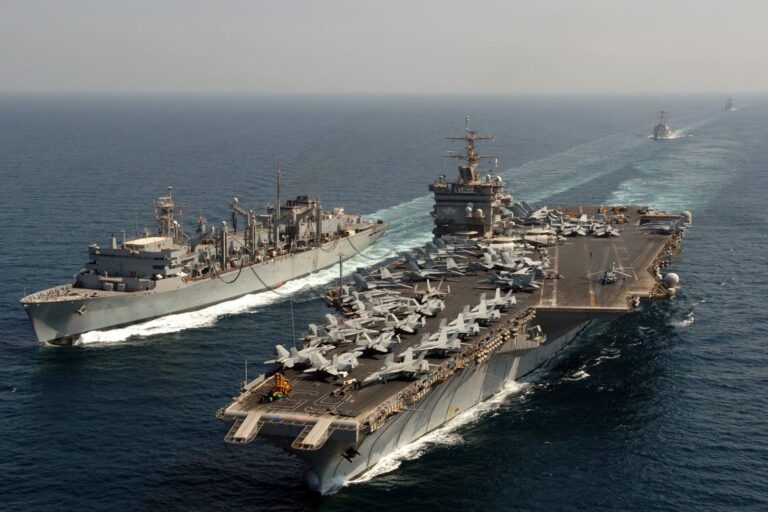
Iran’s internal unrest and its regional posture add another dimension to this volatile environment eclipsed by sporadic episodes of military conflagration with the U.S. and Israel, violent domestic protests, and stresses under pervasive politico-economic pressure. Leveraging its proximity to a chokepoint through which 27% of global crude oil and 22% of global liquefied natural gas transit, blockading the Strait of Hormuz remains an operational strategy which Iran will employ if it is approved by Iran’s Supreme National Security Council and Supreme Leader. While the U.S. and Israel want a regime change and an Iranian collapse, respectively, a U.S. military intervention in Iran has not yet happened. However, Trump has not taken the military option off the table. Iran is already strategically cornered and is operating under severe internal and external pressure. With its regional networks in Gaza, Lebanon, Syria, and Yemen significantly degraded, Tehran’s remaining response options would likely shift toward high-impact, asymmetric retaliation. In such a scenario, Iran may deliberately expand the conflict into the maritime domain to restore deterrence through escalation. Disruption of global energy flows, deliberate or collateral maritime pollution, and strikes against U.S. military infrastructure located in Gulf countries are plausible courses of action. These outcomes would impose immediate global economic costs, significantly raising the risk of uncontrolled regional escalation.
Linked to Iran, India’s evolving posture toward the Chabahar Port Project illustrates how external pressures are constraining strategic autonomy. Once tipped to enhance regional connectivity, Chabahar is increasingly being subjected to geopolitical opposition. Indian liquidation of US$ 120 mil to Iran and earlier recalibration of Russian oil imports reflect the narrowing space for independent foreign policy under global political and economic pressures. These strategic adjustments have domestic political implications, generating pressures that may influence external behaviour. In such contexts, the risk of India’s diversionary posturing, particularly against Pakistan, cannot be discounted. Even limited escalation, whether rhetorical or military, especially after what was witnessed in May 2025, carries disproportionate risks of crisis instability in a region characterized by acute mistrust, unabated animosity, compressed decision-making timelines and weak escalation control mechanism.
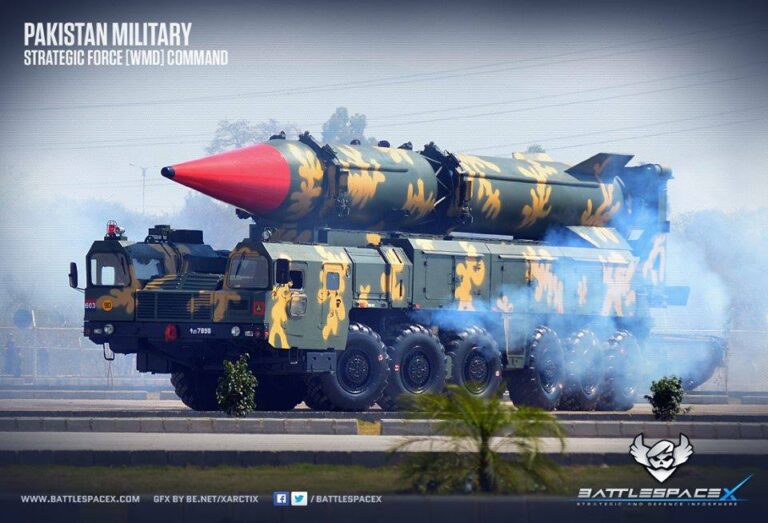
Events in Yemen, the Horn of Africa, Iran, and South Asia collectively indicate that maritime security dynamics are becoming more fragmented, crisis stability more fragile, and the strategic environment increasingly difficult to manage. These developments engender deep geopolitical risk in the form of trade disruptions, rising insurance costs, and energy insecurity, impinging states whose economic stability depends on maritime connectivity. For South Asia, these pressures dovetail with enduring rivalries to dilute crisis stability in the Pakistan-India dyad. Increasing conventional and nuclear asymmetry, notably in the naval domain, reduced diplomatic space, and hypernationalism with catalytic saffronization of politico-military thought make traditional crisis management mechanisms less effective.
This evolving disorder can be considered a manifestation of the VUCAII framework. This is primarily because recent events in the Western Indian Ocean have shown that violence is increasingly applied for political purposes, uncertainty dominates interstate relations, chaos emerges without notice, alignments are unpredictable and amorphous, military altercations are increasingly characterized by lethal innovative ideas, and erstwhile international norms are violated with self-granted impunity and without remorse. Middle powers like Pakistan that are heavily dependent on maritime trade and energy imports, face clear challenges from chokepoint insecurity, spillover of proxy-enabled violence, and intensified extra-regional naval presence. The same environment, however, also offers opportunities for calibrated maritime diplomacy, participation in broader multilateral arrangements, and minilateral security initiatives with regional stakeholders. All of this makes Pakistan Navy a key plank of statecraft.
For Pakistan, it is essential to not only strengthen maritime power projection capabilities but also integrate maritime considerations and objectives into broader foreign and economic policy planning frameworks. Moreover, safeguarding sea lines of communication, it must be stressed, requires not only naval capabilities but also robust investments in instituting cooperative security mechanisms. In an era defined by VUCAII dynamics, ongoing events in the Western Indian Ocean littorals reflect a convergence of regional conflicts that directly affect maritime security and crisis stability well beyond their immediate geographic spheres. In order to navigate such challenges, Pakistan requires an integrated whole-of- government approach, sustained regional engagement, and a clear recognition that regional crisis stability remains vulnerable due to events beyond the Subcontinent itself.
Ehsan Ahmed Khan is a Phd Scholar of International Relations at the School of Integrated Social Sciences, University of Lahore and Deputy President Maritime Centre of Excellence at Pakistan Navy War College, Lahore.
The views expressed in the article are the author’s own, and they do not necessarily reflect those of Pakistan Politico.
About the Author