Source: Small Wars Journal
AI, Cybersecurity and Data Science for Drone and Unmanned Aerial Vehicles:Real-Life Applications and Case Studies
Editors: Shishir Kumar Shandilya, Fernando Ortiz Rodriguez, Smita Shandilya, and Gerardo Romero
ISBN: 9781032766140
Publisher: Routledge
Arooba Younas
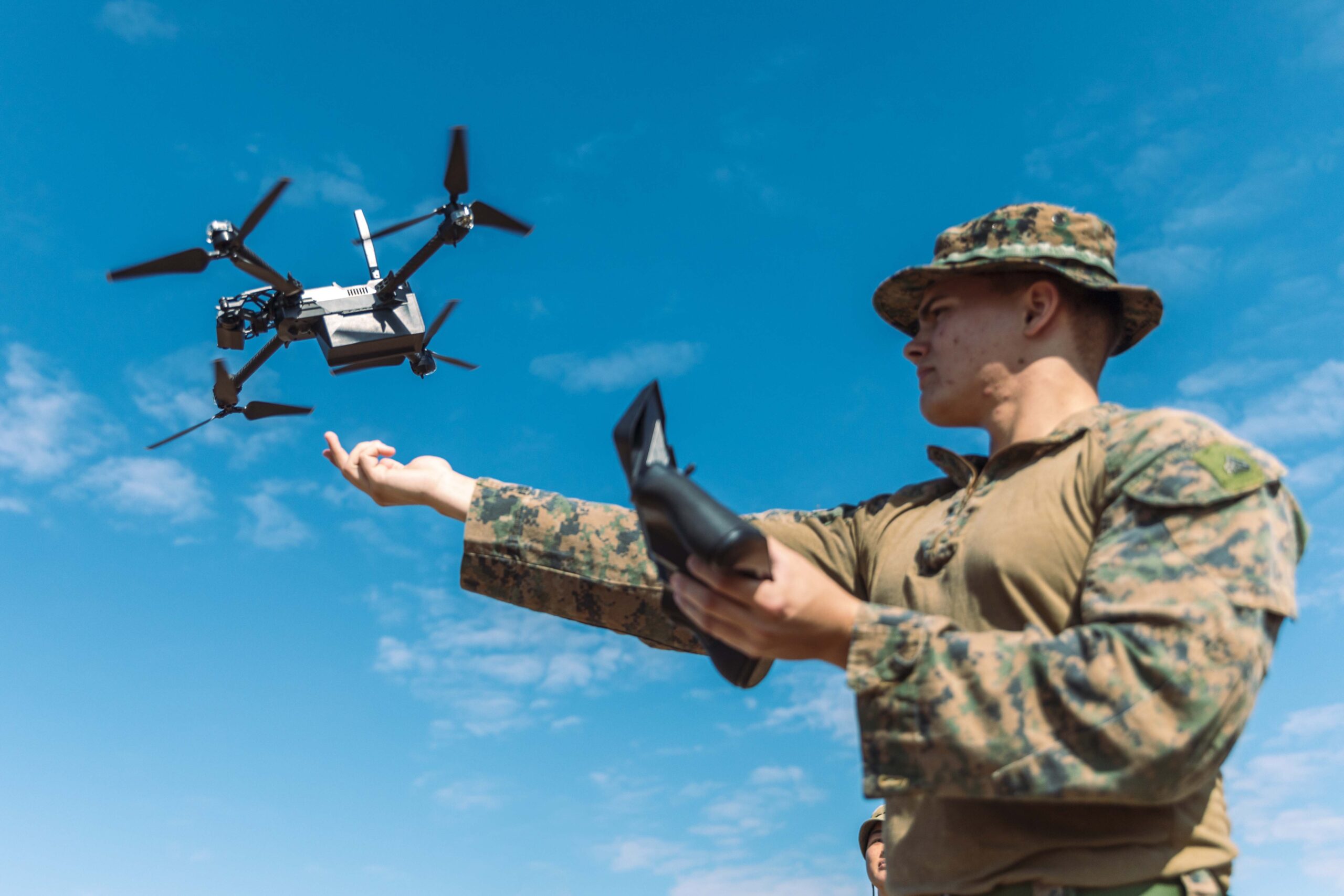
Drones have been recognized as a consequential and significant technology of the present age, in both war and peacetime. In this vein, the reference book entitled “AI, Cybersecurity and Data Science for Drone and Unmanned Aerial Vehicles: Real-Life Applications and Case Studies” is a timely exploration of drone technology’s transformative impact across an array of industries, which range from agriculture and drone swarms to logistics and disaster response. Through a rich tapestry of seven chapters, the book presents drones both as a promise and a peril.
The book includes scholarly contributions by multiple authors, who are all well-versed in their specific fields. It is also interesting to observe that most of the writers hail from the Global South, including Mexico, India, and Pakistan, offering a set of nuanced perspectives.
The book’s central theme is the versatility of drones, often portraying them as instruments that can be deployed across a plethora of sectors. Essentially, drones are presented as a technology celebrated for enabling precision agriculture, healthcare, logistics, disaster response, and military operations. Primarily configured to facilitate crop monitoring and targeted spraying to boost yield, the revolutionary use of drones in agriculture, not least in the Global South, should be taken with a pinch of salt. This is because their trade-offs are rarely discussed, wherein they will displace the poorest agricultural labourers in the Global South. By providing reach and access to remote areas, drones have been extolled for their last-mile delivery, such as Alphabet’s Wing drones dropping off edible goods in rural Australia.
Yet the book does not read as an advocacy for drones. Its balanced approach is evidenced by the authors’ acknowledgment of the risks and vulnerabilities drones bring with them. Detailing the cybersecurity threats, such as Classic Buffer Overflow, weak authentication, GPS spoofing, and Denial of Service, as well as security threats posed by drones, the book presents several case studies on drone incidents to demonstrate the need for further hardening the system from the perspective of security and forensics. The forensic chapter outlines the protocols for data recovery and analysis across GPS modules.
Therefore, the authors highlight a sobering reality: technological innovation within drones has surpassed governance and investigative methodologies, causing their increased misuse and exploitation. Although drone laws have been mentioned in the U.S. context, particularly by the U.S. Federal Aviation Administration (FAA) and institutions such as the European Aviation Safety Agency (EASA) and the International Civil Aviation Organisation, they have been limited to the civilian domain, not the autonomous strikes undertaken in the military context. While the authors present current regulations in place by the FAA and EASA, they admit that the advent of AI regulations will put drone automation under scrutiny. However, they do not present a substantial critique of the existing policies or propose concrete governance models. Additionally, the ethical and legal issues in the form of privacy concerns and unintended use have been noted, but they have not been sufficiently interrogated.
At times, the book lapses into techno-optimism based on the capability of drones linked with AI technology to solve systemic issues such as access to healthcare and food insecurity without considering the reality of the present capitalist world, for which these crises are a permanent fixture. Although the authors hail from the Global South, disproportionate attention is given to the U.S. and Europe. Also, the environmental concerns regarding the lifecycle costs of drones, such as their manufacturing footprints and disposal, are not fully addressed, with praise limited to their operations where they have reduced emissions as compared to ground-based vehicles.
Given the timeframe of the book’s writing, it was expected that the case studies used would take into account recent war theaters, especially in the last chapter dealing with the challenges and risks of drone technology. The authors are cognizant of drone misuse by terrorist organizations and the challenge of accountability in military operations. Concurrently, they recognize the change in drone-employment strategies, owing to the positives emanating from it in the form of movement, surveillance, and target identification. However, the authors did not take into account the Russia-Ukraine theater to underscore drones’ effectiveness in an asymmetric setting, wherein Ukraine has been able to stand its ground and fight Russia, a state with better technology and a larger army.
Reshaping this protracted war, Ukrainian drones have been able to conduct an interdiction campaign against Russian logistics, while their cheap First-Person View drones have been able to destroy heavily armoured battle tanks costing millions of dollars. The notion that drones are becoming important in warfare has been further reinforced during the ongoing U.S.-Israeli war against Iran, where decentralized, low-cost, and software-driven drones were able to target and undermine multi-million-dollar defense platforms as well as advanced hardware. Changing the arithmetic and economics of modern war by creating a destructive financial and operational imbalance between offense and defense, Iran made U.S. policymakers rethink the utility of engaging in this costly war.
The authors have mentioned non-state actors, not least extremist groups, taking control of drones and rerouting the payload to suit their heinous purposes. However, the book falls short of elaborating on terrorist organizations’ understanding of the logic of unmanned warfare through real-life case studies. This has been most visible in the context of Pakistan. The Tehrik-e-Taliban Pakistan and the Afghan Taliban have used rudimentary drones by repurposing widely available commercial drones, attempting to breach Pakistan’s sovereignty. Nonetheless, Pakistan’s response to protect its skies by quickly detecting, intercepting, and destroying drones presents a pertinent lesson for states worldwide:anti-drone technology has to become an essential part of a state’s military arsenal.
All in all, the book’s structured presentation of drone types, as well as their applications and vulnerabilities in different industries, makes it a valuable reference for students and practitioners alike. Although the book cogently presents drones as a transformative technology, it rarely delves into the socio-political, legal, and environmental factors shaping their deployment. Nonetheless, the book serves as a reminder to readers that drones have evolved in their use and have become contested instruments. The book will also serve as a starting point for those wanting a deeper engagement with equitable use, ethics, and governance of drones, leaving open the questions of regulation and ethical integration of these machines into our world.
Arooba Younas is a Research Assistant at the Centre for Aerospace and Security Studies (CASS), Lahore.
The views expressed in this article are the author’s own, and they do not necessarily reflect those of Pakistan Politico.
About the Author