Source: Dialogue Pakistan
Syed Ali Zia Jaffery
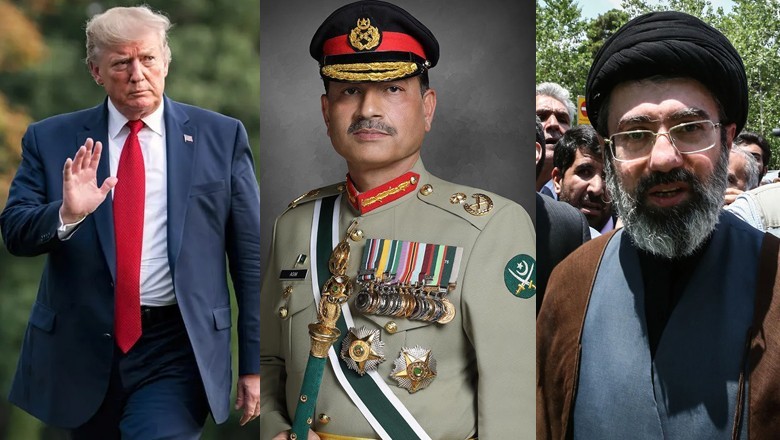
On April 8, 2026, the U.S. and Iran lauded Pakistan’s civil and military leadership for brokering a 2-week ceasefire. This announcement was made hours after U.S. President Donald Trump threatened to destroy Iran’s civilization. The days leading up to the ceasefire saw Pakistan take the lead in facilitating and mediating talks between the U.S. and Iran. While the ceasefire is unlikely to hold given Israel’s continued brutalities in Lebanon and provocative signaling from the U.S., the mere fact that Pakistan got both sides to agree to it is no mean feat. This is primarily because the level of distrust between the U.S. and Iran was too high, with the latter insisting that a ceasefire was not in its interest. This essentially means that whatever happens in the days to come, Pakistan has already gained more than many had expected when the U.S.Israeli war against Iran had started. At least three gains are noteworthy.
First, by stepping up as a facilitator and a mediator in the midst of a multi-party, intricate war, Pakistan demonstrated that it is becoming a much more confident middle power, one that can navigate troubled waters to advance regional stability. This confidence can be guaged by the fact that Pakistan liaised between parties which have twice gone to war in the middle of negotiations. This is precisely why making Iran, a country that was attacked while it was negotiating, agree to a ceasefire is a big feather in Pakistan’s cap. Concomitantly, that both Iran and the U.S. will hold direct talks in Islamabad speaks to how Pakistan has emerged as a trusted mediator. Regardless of the outcome of the upcoming talks, this emergence cannot be wished away.
Second, even a temporary pause in the war will provide some respite to Pakistan’s fledgling economy. Ever since the outbreak of the war, fuel prices and inflation have risen, and fears of shortages have forced the government to adopt austerity measures. Increasing levels of uncertainty surrounding the war would be disastrous for the country’s economy. The ceasefire, while tenuous, might open a window for substantive negotiations between the U.S. and Iran. Resultantly, it might stave off some pressure from the government, leading it to lessen the burden on the public. Unremitting attacks, especially on energy-related infrastructure in the Persian Gulf, would have been calamitous for Pakistan. This is not to say that Pakistan’s economic woes would end. If anything, they remain a major concern because of a bevy of structural reasons.
Last but not least, by playing the role of a mediator, Pakistan successfully steered clear of becoming a direct combatant in the war. While Pakistani officialdom said it would stand by Saudi Arabia if required, it consistently engaged with all sides and global powers, including China. The purpose was to create a broader consensus over the need for negotiations. Here, what is more telling is the course that Islamabad did not take: an aggressive posture against Iran. If Islamabad had chosen to become a party to an illegal war against Tehran, even at the behest of Riyadh, it would have courted a bevy of disaster. Apart from running the risk of engaging in a war of attrition with Iran, Pakistan would have faced rising levels of sectarian violence, the signs of which were visible during the first week of the war. However, it is important to note that, regardless of sects, Pakistanis felt that Iran bravely resisted the onslaught from the U.S. and Israel. Therefore, by choosing mediation over becoming a warring party, Pakistan averted the possibility of being dubbed anti-Iran. This approach also afforded Pakistan the opportunity to continue its constructive engagements with all Gulf countries. Islamabad’s success in striking this balance amid a multi-pronged conflagration was creditable. Absent this ceasefire, this balancing act would have come under strain. Therefore, the April 8 ceasefire will help Pakistan continue to avoid embroiling in camp politics.
All in all, the ceasefire, however imperfect, has increased Pakistan’s diplomatic clout, partially arrested a precipitious crumbling of the economy, and enabled it to remain a non-combatant. These pros would not wither away even if negotiations go awry. That being said, given the complexities of the Middle Eastern theater, Pakistan must tread carefully going forward. The task, it must be stressed, is not an easy one, not least because of the presence of spoilers and insincere coercers. The Middle East’s structure, too, gives little reason to be optimistic about the prospect of peace and stability. A more stable Middle Eastern architecture can only be created if regional stakeholders commit to strategically resetting the region. While Pakistan could and must help, it shouldn’t be blamed for the failure of regional countries to establish a workable modus vivendi.
Syed Ali Zia Jaffery is Associate Editor, Pakistan Politico.
About the Author