Source: Media Online Today
Ehsan Ahmed Khan
The Indian Ocean is no longer just a transit space characterized by its commerce and connectivity. It has become a contested strategic arena where great power competition, regional rivalry, and non-state disruption intersect with global energy security. For Pakistan, the North Arabian Sea is now inseparable from broader Indian Ocean geopolitics. As the circumstances dictate, for Pakistan, national security, economic resilience, and deterrence credibility will increasingly be decided at sea, and therefore, the developments in Oceanic Pakistan can no longer be segregated from those in continental Pakistan.
Great power competition is often misunderstood as a temporary phase or a Western policy construct. In reality, it is a structural feature of an anarchic system. Historically, powerful nations have often seen one another as rivals. Ancient Egypt’s ambitions collided with those of the Hittites, Assyrians, and Babylonians, while Rome, at its peak, ground against the Persian Empire. Major powers compete not because they choose to, but because they must in order to secure national interests, maintain relative power, and shape international or regional order. The quest to retain uncontested access to resources and pursuance of wealth, security, and influence without crossing the threshold of direct war exacerbates this competition.
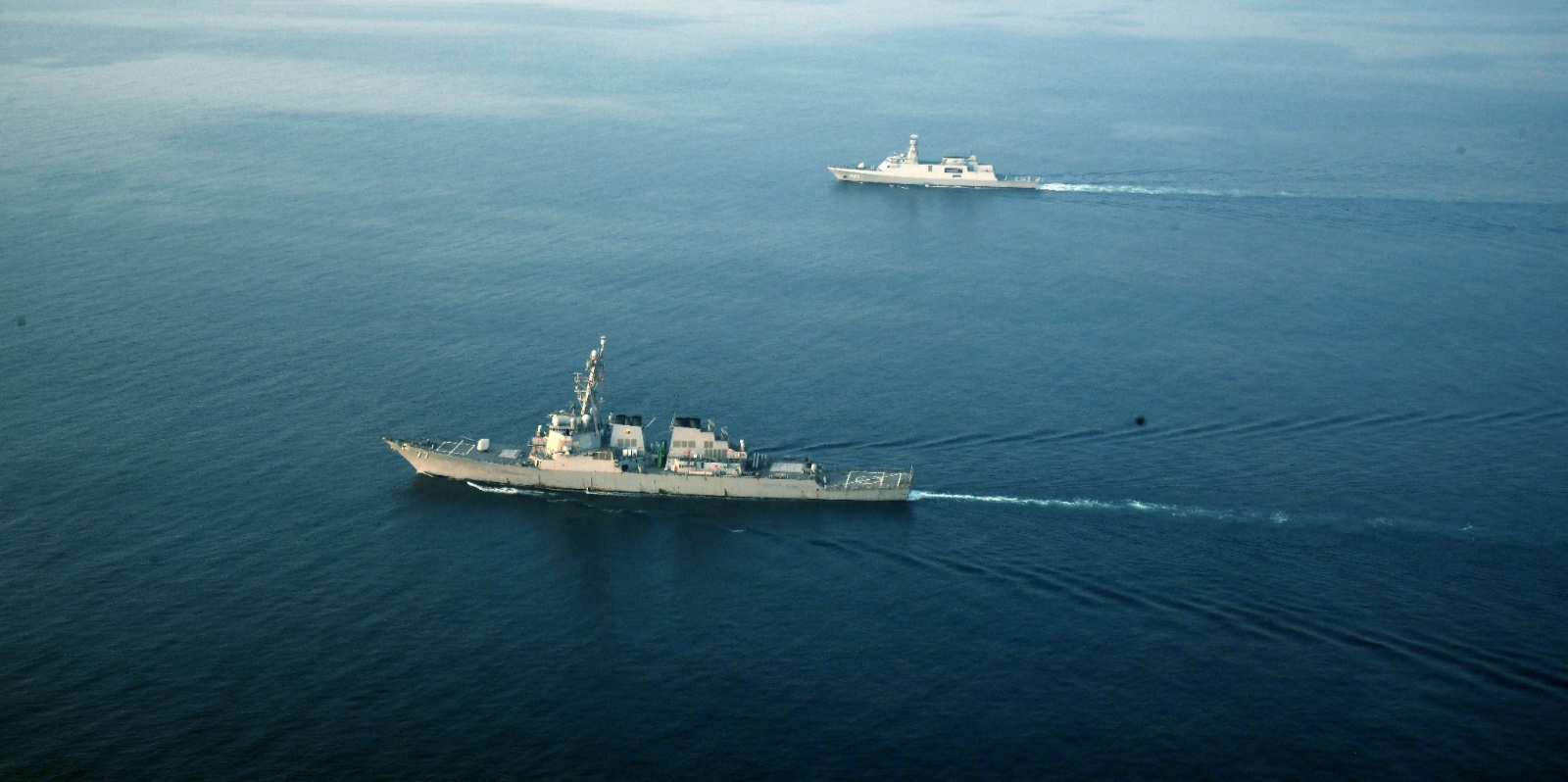
Historically, maritime spaces have been central to such competition. British naval dominance underpinned imperial power; Cold War naval deployments stabilized deterrence; and today, control over sea lines of communication (SLOCs) determines economic and strategic leverage. The Indian Ocean chokepoints, the Strait of Hormuz, Bab-el-Mandeb, and the adjacent waters of the North Arabian Sea, are infested with a mix of traditional and non-traditional security concerns and are now increasingly designated as pressure points of global politics. In this rapidly evolving order (or disorder), the United States seeks to preserve maritime primacy, China focuses on securing its energy lifelines and trade routes, and India aspires to regional naval preeminence as a net security provider. This competition is not theoretical, but it is manifested through persistent naval deployments, expanding surveillance networks, port access arrangements, and coalition-building efforts that increasingly impact and shape Pakistan’s maritime environment.
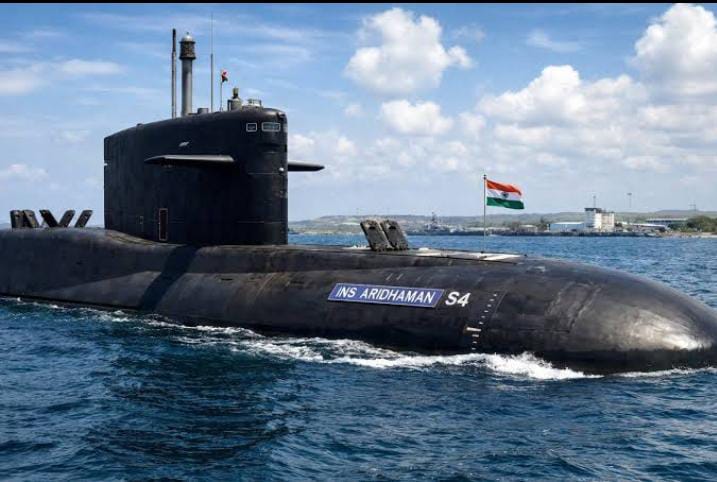
India’s strategic shift from a continental to a maritime-oriented power is one of the most consequential developments for Pakistan’s security. New Delhi’s naval strategy has evolved from SAGAR to MAHASAGAR, feeding into Indian ambitions of transitioning from a liminal power to a maritime hegemon in the Indian Ocean. Its ambitions for naval power and strategic deterrence, executed through a modernization plan that includes aircraft carriers, nuclear submarines (SSBN and SSN), amphibious and expeditionary warfare capacity, and expanding anti-submarine warfare capabilities, are not merely defensive; they are instruments of regional influence. India’s alignment with the United States and other Indo-Pacific partners, intelligence sharing, and coordinated naval exercises have second-order effects on Pakistan’s deterrence calculus. Though not desirable, Pakistan cannot insulate itself from the competition between the heavyweights. Pitted against an oversized adversary that thrives on an intoxicated and exclusive ideology, Pakistan must chart its strategy as a middle power that does not structure itself symmetrically but develops an asymmetric maritime balance that prioritizes denial over dominance and resilience over visibility.
Contemporarily, middle powers represent countries that align themselves geopolitically with both the United States and China without being entirely committed to either, are politically relevant to the regional economic and security situation, and have recognizable stakes in a range of global issues. If these criteria are anything to go by, Pakistan can be considered a middle power. However, for Pakistan, this quintessentially means calibrated balancing, maintaining functional relations with all major powers while avoiding entanglement in their rivalries. It also means resisting attempts by any regional actor to impose a hierarchical maritime order under the guise of “security provision.” India’s domination of the Indian Ocean is neither inevitable nor uncontested. It will be shaped by the responses of other regional actors, including Pakistan.
Pakistan’s energy security has an existential dependence on the maritime routes. Any disruption, whether from interstate conflict, proxy warfare or non-state actors, translates immediately into economic stress and political instability. Recent disruptions in the Red Sea have demonstrated how even limited maritime insecurity can engender global ripple effects. Shipping rerouted around Africa, rising insurance premiums, and increased freight costs are not temporary shocks; they are indicators of a structurally volatile maritime environment. For Pakistan, energy security can no longer be treated as an economic issue divorced from defense planning. A destabilized North Arabian Sea directly undermines national security. Despite the presence of powerful multinational naval task forces, maritime security in the region remains fragile. Legal constraints, political hesitancy, coalition fragmentation and escalating risks limit the effectiveness of even the most capable forces. This reinforces a fundamental realist principle: no external actor will secure Pakistan’s maritime interests better than Pakistan itself.
In this context, the Pakistan Navy should not merely be a defensive service guarding the coastline. It has to be curated as an essential and central pillar of national strategy. For a middle power operating under structural constraints, naval effectiveness is measured not by fleet size but by the ability to complicate adversaries’ operational environments. Credible sea-based deterrence, strong anti-access/area-denial capabilities, and ominous maritime domain awareness provide Pakistan with reliable options to offset conventional asymmetries. These capabilities disrupt adversary planning, raise the costs of coercion, and contribute directly to strategic stability in the Indian Ocean. The integration of sea-based deterrents enhances survivability and strengthens overall deterrence credibility. Consequently, the maritime domain is no longer separate from strategic deterrence calculus; it is intrinsic to it.
As the geopolitical chessboard unfolds, great power competition in the Indian Ocean is likely to intensify. India’s maritime ambitions will expand, and non-state actors-led disruptions will continue unabated. Pakistan must navigate these phenomena. In this regard, a proactive, realist, and navy-centered maritime strategy offers the best path forward. History is unforgiving to states that neglect the maritime dimension of power. Pakistan is well set to be a stabilizing middle power in the Indian Ocean. Playing such a role is not a matter of choice but a compulsion. In this context, according less priority to maritime affairs is no longer strategically sustainable. Pakistan requires an Indian Ocean–centric maritime policy that reflects contemporary realities. Such a policy must integrate naval planning with energy security, economic resilience, and strategic deterrence, recognizing that the maritime domain is not just a supporting theatre but a central element of national power.
Ehsan Ahmed Khan is a Phd Scholar of International Relations at the School of Integrated Social Sciences, University of Lahore and Deputy President Maritime Centre of Excellence at Pakistan Navy War College, Lahore.
The views expressed in the article are the author’s own, and they do not necessarily reflect those of Pakistan Politico.
About the Author